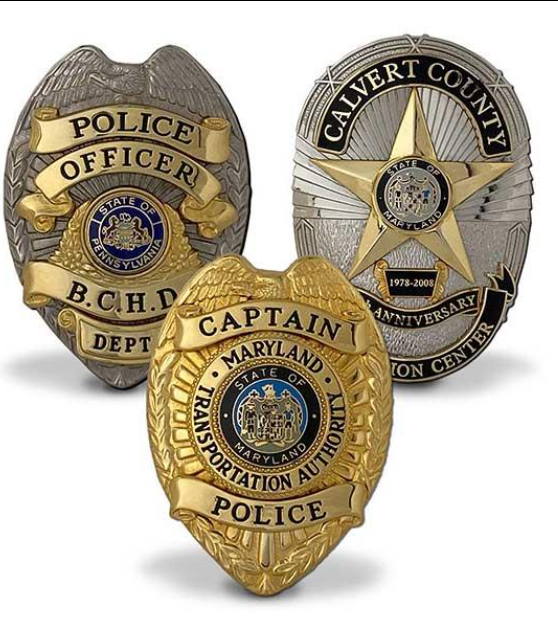
A law enforcement badge is more than a metal emblem. It represents professional identity, organizational recognition, department history, and public service. For police departments, sheriff’s offices, security organizations, academies, ceremonial programs, and other authorized organizations, selecting the right custom law enforcement badge manufacturer is an important part of the purchasing process.
A professional manufacturer should be able to support the complete production process, including artwork review, engineering, tooling, metal forming, polishing, plating, enamel finishing, assembly, inspection, packaging, and delivery.
This guide explains the manufacturing process, materials, finishing options, OEM and ODM services, cost structure, production considerations, quality control, and 100 frequently asked questions about custom law enforcement badges.
What Is a Custom Law Enforcement Badge?
A custom law enforcement badge is a metal badge manufactured according to an organization’s authorized design and specifications.
Unlike generic badges, custom badges can be developed with specific:
- Department names
- Agency logos
- Badge numbers
- Rank information
- Symbols
- Stars
- Shields
- Eagles
- Text
- Borders
- Custom shapes
- 2D or 3D relief
- Plating finishes
- Enamel colors
- Attachment systems
The final product can be designed around the organization’s visual identity and manufacturing requirements.
For bulk production, consistency is particularly important. A manufacturer needs to maintain consistent dimensions, lettering, relief, plating, enamel, and surface quality throughout the production run.
Who Uses Custom Law Enforcement Badges?
Custom badges may be manufactured for a variety of authorized organizations and programs, including:
- Police departments
- Sheriff’s offices
- Highway patrol organizations
- Campus police
- Transit police
- Corrections organizations
- Security organizations
- Law enforcement academies
- Honor guards
- Training programs
- Department anniversary programs
- Retirement recognition
- Ceremonial programs
- Commemorative events
- Special recognition programs
The use and design of an official law enforcement badge should always comply with the applicable organization’s authorization and local requirements.
Why Choose a Professional Law Enforcement Badge Manufacturer?
A badge can look simple, but detailed metal badge manufacturing involves several technical stages.
A single design may contain:
- Fine lettering
- Small symbols
- Raised borders
- Recessed backgrounds
- Multiple relief levels
- Enamel sections
- Textured surfaces
- Multiple plating finishes
- Curved areas
- Complex logos
- Custom attachment components
A design that looks perfect in a digital file may not automatically be suitable for metal production.
For example, extremely small lettering may become difficult to reproduce clearly. Narrow lines may need to be adjusted, and complicated 3D relief may require engineering modifications.
This is why a professional manufacturer should perform a design-for-manufacturing review before tooling begins.
OEM vs ODM Law Enforcement Badge Manufacturing
What Is OEM?
OEM means that the customer provides the product concept, artwork, or specifications and the manufacturer produces the badge according to those requirements.
A typical OEM project includes:
- Artwork submission
- Engineering review
- Digital proof
- Customer approval
- Tooling
- Metal production
- Surface finishing
- Assembly
- Quality inspection
- Packaging
- Shipping
OEM is ideal for organizations that already have a finalized badge design.
What Is ODM?
ODM gives the manufacturer a greater role in product development.
The customer may provide:
- A logo
- Department name
- Basic concept
- Preferred badge shape
- Approximate size
- Design references
The manufacturer can then help develop:
- Badge proportions
- Relief structure
- Border design
- Material
- Plating
- Enamel
- Attachment system
- Production specifications
ODM can be especially useful when the buyer has an idea but does not have a production-ready design.
Custom Law Enforcement Badge Materials
Material selection influences the badge’s weight, appearance, durability, production method, and cost.
| Material | Main Characteristics | Potential Applications |
|---|---|---|
| Brass | Traditional appearance and good finishing capability | Premium and traditional badges |
| Copper | Good detail reproduction and metallic appearance | Specialty badges |
| Zinc Alloy | Suitable for complex shapes and 3D relief | Detailed custom badges |
| Stainless Steel | Durable and corrosion resistant | Specialty applications |
| Aluminum | Lightweight | Lightweight badge designs |
There is no single material that is best for every project.
The appropriate material depends on the badge’s:
- Design
- Dimensions
- Thickness
- Relief
- Weight requirements
- Finishing
- Quantity
- Budget
Brass vs Zinc Alloy for Custom Badges
Brass
Brass is commonly considered when the customer wants a traditional and substantial metal appearance.
Potential advantages include:
- Premium appearance
- Good plating capability
- Substantial weight
- Traditional metal appearance
- Good surface finishing
Zinc Alloy
Zinc alloy is useful for more complicated shapes and detailed cast designs.
It can be suitable for:
- 3D relief
- Complex borders
- Sculpted logos
- Multiple height levels
- Curved surfaces
- Intricate decorative details
The decision should be based on the actual product design rather than simply choosing the least expensive material.
2D vs 3D Law Enforcement Badges
2D Badges
A 2D badge normally has relatively flat artwork with controlled raised and recessed areas.
Advantages can include:
- Clean appearance
- Clear lettering
- Straightforward engineering
- Simpler tooling
- Traditional visual style
3D Badges
A 3D badge contains multiple levels of relief.
For example:
- Background: lowest level
- Text: raised level
- Logo: higher level
- Border: another raised level
This creates depth and visual separation.
3D relief can be particularly effective for:
- Eagles
- Shields
- Stars
- Department seals
- Buildings
- Vehicles
- Commemorative symbols
- Complex emblems
However, 3D does not automatically mean better. The correct choice depends on the design and intended appearance.
Custom Law Enforcement Badge Plating Options
Surface finishing has a major effect on the appearance of a badge.
Common options include:
Bright Gold
Creates a bright metallic appearance.
Bright Silver
Provides a clean and contemporary appearance.
Antique Gold
Darkened recessed areas create additional contrast.
Antique Silver
Provides a traditional, darker metallic appearance.
Nickel
Creates a bright metallic finish.
Black Nickel
Provides a darker and more contemporary appearance.
Brushed Finish
Creates directional surface texture.
Polished Finish
Produces a smoother and more reflective surface.
Different finishes can sometimes be combined within one badge.
For example, the raised emblem may use a polished surface while the recessed background uses an antique treatment.
Soft Enamel vs Hard Enamel
Enamel can be used when a badge design contains colored areas.
Soft Enamel
Soft enamel is filled into recessed areas and generally maintains a dimensional surface.
It can work well for:
- Department colors
- Small logos
- Decorative details
- Multi-color designs
Hard Enamel
Hard enamel is polished to create a smoother finished surface.
It can provide a more refined appearance and smooth tactile feel.
The best option depends on:
- Design
- Color requirements
- Desired appearance
- Production process
- Budget
- Application
Custom Law Enforcement Badge Manufacturing Process
Step 1: Artwork Submission
The customer provides artwork, sketches, logos, images, or technical specifications.
Vector artwork is generally preferred because it provides clearer information for production engineering.
Step 2: Engineering Review
The manufacturer reviews:
- Letter size
- Line width
- Relief depth
- Border width
- Badge dimensions
- Enamel areas
- Attachment locations
- Plating requirements
The purpose is to identify potential production problems before tooling begins.
Step 3: Digital Mockup
A digital proof can show:
- Badge shape
- Dimensions
- Colors
- Plating
- Relief
- Text
- Logo position
- Overall appearance
Customers should carefully check spelling, numbers, proportions, and design details before approval.
Step 4: Tooling
Once the artwork is approved, production tooling is developed according to the selected manufacturing process.
Tooling is particularly important for custom metal products because it determines how accurately the design can be reproduced.
Step 5: Metal Forming
Depending on the design and material, production may involve:
- Stamping
- Die casting
- Metal forming
- CNC machining
- Secondary machining
The appropriate process depends on the product specifications.
Step 6: Trimming
Excess material is removed and the badge outline is refined.
Step 7: Polishing
The surface is prepared for subsequent finishing.
Surface preparation is important because the final appearance of plating depends heavily on the condition of the metal surface.
Step 8: Plating
The selected metallic finish is applied.
Step 9: Enamel Filling
If the design requires colored sections, enamel is applied to the designated areas.
Step 10: Assembly
Attachment components such as posts, pins, clutches, or other approved hardware are installed.
Step 11: Quality Inspection
Finished products are checked for:
- Dimensions
- Shape
- Lettering
- Relief
- Plating
- Enamel
- Surface condition
- Attachments
- Quantity
Step 12: Packaging
Finished badges are packaged according to the customer’s requirements.
Individual packaging can provide additional protection, while bulk packaging can reduce packaging labor and material consumption.
Custom Law Enforcement Badge Cost Analysis
One of the most common questions from buyers is:
How much does a custom law enforcement badge cost?
There is no universal price because each project has different specifications.
A useful cost model is:
Total Project Cost = Tooling + Metal Production + Finishing + Assembly + Packaging + Shipping
The approximate unit cost can then be calculated as:
Unit Cost = Total Project Cost ÷ Quantity
This is why comparing only the quoted unit price can be misleading.
Example Manufacturing Cost Model
The following figures are hypothetical examples for explaining cost structure, not fixed market prices.
Suppose a project has:
- Tooling: $500
- Production: $2.50 per badge
- Packaging: $100
- Quantity: 500 pieces
Production cost:
500 × $2.50 = $1,250
Total pre-shipping project cost:
$500 + $1,250 + $100 = $1,850
Estimated pre-shipping unit cost:
$1,850 ÷ 500 = $3.70 per badge
Now consider a hypothetical 2,000-piece order.
Assume:
- Tooling: $500
- Production: $2.20 × 2,000
- Packaging: $250
Production:
2,000 × $2.20 = $4,400
Total:
$500 + $4,400 + $250 = $5,150
Estimated pre-shipping unit cost:
$5,150 ÷ 2,000 = $2.575
The example illustrates a fundamental manufacturing principle:
Fixed development costs have less impact on unit economics as production quantity increases.
Quantity Analysis
The following table is another hypothetical example.
| Quantity | Example Production Cost/Unit | Example Tooling Allocation/Unit |
|---|---|---|
| 100 | $4.50 | $5.00 |
| 250 | $3.80 | $2.00 |
| 500 | $3.20 | $1.00 |
| 1,000 | $2.80 | $0.50 |
| 2,500 | $2.40 | $0.20 |
| 5,000 | $2.15 | $0.10 |
These numbers should not be treated as a standard industry price list.
Actual pricing depends on the individual project.
What Influences Custom Badge Pricing?
1. Quantity
Quantity has a major effect on tooling allocation and production efficiency.
2. Badge Size
Larger products generally require more metal.
3. Thickness
Greater thickness generally increases material consumption and weight.
4. Material
Different metals have different production characteristics.
5. 2D or 3D Design
Complex 3D designs can require more complicated tooling.
6. Plating
Specialized or multi-finish plating can add processing requirements.
7. Enamel
Additional enamel processing can increase production steps.
8. Attachment
Custom attachment hardware may increase assembly requirements.
9. Packaging
Individual packaging usually requires more labor than bulk packaging.
10. Shipping
Freight costs influence the final landed cost.
Why the Lowest Unit Price Is Not Always the Best Deal
Suppose Supplier A quotes $2.50 per badge while Supplier B quotes $2.80.
At first glance, Supplier A appears cheaper.
But imagine Supplier A has:
- Higher defect rate
- Less consistent plating
- Longer production time
- More packaging damage
- Additional rework
Supplier B may have a slightly higher manufacturing price but lower total project risk.
A better purchasing calculation is:
Total Project Cost = Product Cost + Tooling + Packaging + Shipping + Quality-Related Costs + Delay Costs
This is particularly important for large orders.
Defect Rate Analysis
Consider a hypothetical defect rate of 2%.
For a 100-piece order:
100 × 2% = 2 defective pieces
For a 1,000-piece order:
1,000 × 2% = 20 defective pieces
For a 5,000-piece order:
5,000 × 2% = 100 defective pieces
The same percentage can therefore represent a very different business impact at different production volumes.
This is why quality control becomes increasingly important as order quantities increase.
Quality Control for Law Enforcement Badges
A professional production system should include several inspection stages.
Material Inspection
Check the incoming metal material.
Tooling Inspection
Confirm that the mold or die accurately represents the approved design.
First Article Inspection
Inspect the initial production piece before continuing with the full production run.
In-Process Inspection
Monitor the production process for consistency.
Finishing Inspection
Check:
- Plating
- Polishing
- Enamel
- Surface texture
- Color
Final Inspection
Check:
- Dimensions
- Quantity
- Shape
- Lettering
- Surface quality
- Attachments
- Packaging
Common Custom Badge Manufacturing Problems
Blurred Lettering
Extremely small text can be difficult to reproduce.
Uneven Plating
Surface preparation and finishing conditions can influence plating consistency.
Uneven Enamel
Filling and curing conditions can influence the final result.
Surface Scratches
Handling, polishing, assembly, and packaging can cause scratches.
Incorrect Dimensions
Poor engineering or inadequate inspection can result in dimensional differences.
Loose Attachments
Improper assembly can result in loose posts, pins, or other hardware.
Color Inconsistency
Multiple production batches can require careful color control.
A strong quality-control process should identify these issues before the finished products reach the customer.
How to Reduce Custom Badge Manufacturing Costs
Simplify Excessively Fine Details
Removing unnecessary micro-details can simplify tooling and improve readability.
Select the Appropriate Material
Choose the material according to the design rather than automatically choosing the most expensive option.
Optimize Dimensions
A carefully planned badge size can reduce material consumption.
Select Appropriate Finishing
Not every badge requires multiple finishing processes.
Increase Order Quantity When Appropriate
Larger orders can distribute fixed tooling costs over more pieces.
Finalize Artwork Before Tooling
Late design changes can increase cost and production time.
What Should Be Included in a Custom Badge Quotation?
A professional quotation should ideally identify:
- Product name
- Material
- Badge dimensions
- Thickness
- Quantity
- 2D or 3D design
- Plating
- Enamel
- Attachment
- Tooling
- Packaging
- Production lead time
- Shipping
- Payment terms
- Artwork requirements
Clear specifications make it easier to compare quotations from different suppliers.
What Information Should You Send to the Manufacturer?
When requesting a quotation, provide as much information as possible.
Artwork
Send the badge design or logo.
Quantity
State the required number of pieces.
Dimensions
Provide width and height.
Thickness
Specify the preferred thickness if known.
Material
State whether you prefer brass, zinc alloy, or another material.
Finish
Specify gold, silver, antique, nickel, or another finish.
Enamel
Identify whether the badge requires colored enamel.
Attachment
Specify the desired attachment method.
Packaging
Explain whether individual packaging is required.
Destination
Provide the shipping destination for logistics calculation.
OEM and ODM Services for Custom Law Enforcement Badges
OEM and ODM manufacturing can help organizations develop products according to their own requirements.
A complete custom project can include:
Concept → Artwork → Engineering → Digital Mockup → Tooling → Metal Production → Polishing → Plating → Enamel → Assembly → Inspection → Packaging → Shipping
This integrated process can reduce communication gaps between different suppliers.
For organizations with an existing design, OEM manufacturing provides a direct path from approved artwork to finished badges.
For organizations developing a new design, ODM support can help transform an initial concept into a manufacturable product.
Why Choose ChallengeCoinBadges?
ChallengeCoinBadges provides custom metal product manufacturing and OEM/ODM services.
Our product range includes:
- Custom Law Enforcement Badges
- Police Badges
- Military Badges
- Challenge Coins
- Military Coins
- Custom Medals
- Lapel Pins
- Metal Emblems
- Cufflinks
- Other Custom Metal Products
Our manufacturing process can support projects from artwork development and engineering through tooling, metal production, surface finishing, inspection, and packaging.
If you have a custom law enforcement badge design, you can provide the artwork, quantity, size, material, finish, and other specifications for project evaluation.
Website: www.challengecoinbadges.com
Email: sales@challengecoinbadges.com
100 FAQs About Custom Law Enforcement Badges
General Questions
1. What is a custom law enforcement badge?
A custom law enforcement badge is a metal badge manufactured according to an authorized organization’s design and specifications.
2. Who orders custom law enforcement badges?
Authorized departments, agencies, organizations, and approved buyers can request custom badge production.
3. Can I create a completely custom badge?
Yes. A new badge can be developed from an authorized concept or design.
4. Can an existing badge design be reproduced?
Yes, when the customer has the appropriate authorization or rights.
5. Can a badge include a department name?
Yes.
6. Can a badge include a badge number?
Yes.
7. Can a badge include a name?
Yes, where the design and application require personalized identification.
8. Can a badge include rank information?
Yes.
9. Can the badge have a custom shape?
Yes.
10. Can the badge include a department emblem?
Yes, when properly authorized.
Design Questions
11. What artwork format is recommended?
Vector artwork such as AI, EPS, or editable PDF is generally preferred.
12. Can a JPG be used?
Yes, but it may need to be converted into production-ready artwork.
13. Can the manufacturer create a digital mockup?
Yes.
14. Can I approve the artwork before production?
Yes. Artwork approval should occur before tooling.
15. Can badges have 3D relief?
Yes.
16. What is 3D relief?
It is a design with multiple height levels that creates a three-dimensional appearance.
17. Is 3D better than 2D?
Not necessarily. The correct choice depends on the design and application.
18. Can small lettering be reproduced?
Yes, if the lettering meets the manufacturer’s production requirements.
19. Can the badge have a custom border?
Yes.
20. Can the badge include stars?
Yes.
Material Questions
21. What materials can be used?
Common choices include brass, copper, zinc alloy, stainless steel, and aluminum.
22. Is brass suitable for law enforcement badges?
Yes.
23. Is zinc alloy suitable for 3D badges?
Yes.
24. Is brass always more expensive than zinc alloy?
Not necessarily. Actual cost depends on the complete product specification.
25. Can stainless steel be used?
Yes.
26. Can aluminum be used?
Yes.
27. Does material affect weight?
Yes.
28. Does material affect durability?
Yes.
29. Does material affect plating?
Yes.
30. Does material affect production cost?
Yes.
Size and Thickness Questions
31. Can I specify the badge size?
Yes.
32. Can I specify thickness?
Yes, within manufacturing limitations.
33. Does a larger badge cost more?
Generally, larger badges require more material.
34. Does greater thickness increase cost?
It can increase material usage and weight.
35. Does thickness affect shipping?
Yes.
36. Can badges be lightweight?
Yes.
37. Can large badges be manufactured?
Depending on the design and production process, larger badges can be manufactured.
38. Can the same design be produced in different sizes?
Yes.
39. Can I specify the exact thickness?
Yes.
40. Can size affect tooling?
Yes. Different sizes may require different tooling.
Plating Questions
41. What plating finishes are available?
Common options include gold, silver, nickel, antique gold, antique silver, and black nickel.
42. Can two finishes be combined?
Yes, depending on the design.
43. Can gold and silver be combined?
Yes.
44. What is antique gold?
It is a finish that creates additional contrast between raised and recessed areas.
45. What is antique silver?
It provides a darker traditional metallic appearance.
46. Can raised areas be polished?
Yes.
47. Can recessed areas be darker?
Yes.
48. Can the badge have a brushed finish?
Yes, when suitable for the design.
49. Can I specify the desired plating?
Yes.
50. Can a sample finish be approved?
For suitable projects, sample approval can be arranged.
Enamel Questions
51. Can law enforcement badges include enamel?
Yes.
52. What is soft enamel?
Soft enamel is applied into recessed areas and retains a dimensional surface.
53. What is hard enamel?
Hard enamel is polished to create a smoother surface.
54. Which enamel should I choose?
The choice depends on appearance, design, production requirements, and budget.
55. Can multiple colors be used?
Yes.
56. Can enamel colors follow a specified color reference?
Yes.
57. Can enamel be combined with antique plating?
Yes.
58. Does enamel increase manufacturing cost?
Usually, because it adds additional processing.
59. Can enamel be used on 3D badges?
Yes.
60. Can enamel be limited to selected areas?
Yes.
Manufacturing Questions
61. How are custom law enforcement badges manufactured?
Depending on the design, production may include stamping, die casting, machining, polishing, plating, enamel filling, and assembly.
62. Does every custom badge need a mold?
Many custom metal badges require dedicated tooling, but the exact requirement depends on the manufacturing process.
63. How long does tooling take?
Tooling time depends on design complexity and production scheduling.
64. Can artwork be changed after tooling starts?
Changes may require tooling modifications and could affect cost and lead time.
65. Can prototypes be produced?
Prototype options depend on the design and manufacturing process.
66. Should a production sample be approved?
For important projects, sample approval is recommended.
67. Can existing tooling be reused?
Often, yes, if the tooling remains suitable.
68. Can repeat orders use the same tooling?
Usually, if the original tooling is still usable.
69. Can complex 3D designs be manufactured?
Yes, subject to engineering review.
70. Can custom attachment systems be developed?
Custom attachment solutions may be possible depending on the design.
Cost Questions
71. How much does a custom law enforcement badge cost?
Cost depends on material, size, thickness, quantity, tooling, plating, enamel, attachments, packaging, and shipping.
72. Does quantity affect unit price?
Yes.
73. Why can larger orders have lower unit costs?
Fixed tooling and setup expenses can be distributed across more units.
74. Does 3D increase cost?
It can increase tooling and engineering requirements.
75. Does enamel increase cost?
Usually, yes.
76. Does special plating increase cost?
It can.
77. Does custom packaging increase cost?
Yes.
78. Does shipping affect the final price?
Yes.
79. Should buyers compare only unit prices?
No. Total landed cost is a more useful comparison.
80. What is the biggest cost factor?
There is no universal single factor. Quantity, material, dimensions, design complexity, finishing, packaging, and logistics all contribute.
Bulk Order Questions
81. Can I order 100 badges?
A quotation can be prepared based on the product specifications and requested quantity.
82. Can I order 500 badges?
Yes.
83. Can I order 1,000 badges?
Yes.
84. Can I order 5,000 badges?
Large production orders can be discussed according to factory capacity and specifications.
85. Is there an MOQ?
MOQ depends on the product and manufacturing requirements.
86. Can I order multiple badge designs?
Yes, although each design may require separate tooling.
87. Can I reorder the same badge?
Yes, repeat production can be arranged when specifications and tooling are available.
88. Can existing tooling be used for reorders?
Usually, yes.
89. Can several quantities be quoted?
Yes. Requesting multiple quantity levels can help buyers evaluate unit economics.
90. Can the manufacturer support long-term supply?
Long-term OEM supply arrangements can be discussed according to project requirements.
Quality and Delivery Questions
91. How are custom badges inspected?
Inspection can cover dimensions, shape, lettering, relief, plating, enamel, attachments, surface condition, and quantity.
92. Why is first-article inspection important?
It verifies that the initial production piece matches the approved specifications.
93. What causes plating problems?
Surface preparation and finishing-process variables can influence plating quality.
94. What causes enamel defects?
Filling, curing, surface preparation, and handling can affect enamel quality.
95. What causes scratches?
Polishing, handling, assembly, transportation, or packaging can cause scratches.
96. How long does production take?
Production lead time depends on tooling, quantity, design complexity, finishing, and factory scheduling.
97. Is production time the same as shipping time?
No. Manufacturing and transportation are separate stages.
98. Can custom badges be shipped internationally?
International shipping can be arranged according to the destination and logistics requirements.
99. What information is needed for a quotation?
Artwork, quantity, size, thickness, material, plating, enamel, attachment, packaging, and shipping destination are useful specifications.
100. How can I contact a custom law enforcement badge manufacturer?
Contact ChallengeCoinBadges at sales@challengecoinbadges.com or visit www.challengecoinbadges.com to discuss custom law enforcement badge OEM and ODM projects.
Final Buyer Checklist
Before approving a custom law enforcement badge order, confirm:
- Artwork
- Badge dimensions
- Thickness
- Material
- 2D or 3D relief
- Plating
- Enamel
- Attachment
- Quantity
- Packaging
- Sample approval
- Production lead time
- Shipping method
- Final project cost
The lowest unit price is not always the best purchasing decision. Buyers should evaluate design accuracy, manufacturing capability, material quality, finishing consistency, quality control, production efficiency, lead time, and total landed cost together.
For OEM and ODM custom law enforcement badge projects:
ChallengeCoinBadges
Website: www.challengecoinbadges.com
Email: sales@challengecoinbadges.com
#CustomLawEnforcementBadgeManufacturer
#CustomLawEnforcementBadgeSupplier
#CustomLawEnforcementBadgeFactory
#CustomLawEnforcementBadgeMaker
#CustomLawEnforcementBadgeCompany
#CustomLawEnforcementBadgeProduction
#CustomLawEnforcementBadgeManufacturing
#CustomLawEnforcementBadgeDesign
#CustomLawEnforcementBadgeOEM
#CustomLawEnforcementBadgeODM
#CustomLawEnforcementBadgeWholesale
#CustomLawEnforcementBadgeBulkOrder
#CustomLawEnforcementBadgeFactoryDirect
#CustomLawEnforcementBadgePricing
#CustomLawEnforcementBadgeCost
#CustomLawEnforcementBadgeQuote
#CustomLawEnforcementBadgeSample
#CustomLawEnforcementBadgePrototype
#CustomLawEnforcementBadgeTooling
#CustomLawEnforcementBadgeMold
#CustomLawEnforcementBadge3D
#CustomLawEnforcementBadge2D
#CustomLawEnforcementBadgeRelief
#CustomLawEnforcementBadgeEngraving
#CustomLawEnforcementBadgeLettering
#CustomLawEnforcementBadgeNumber
#CustomLawEnforcementBadgePlating
#CustomLawEnforcementBadgeFinishing
#CustomLawEnforcementBadgeEnamel
#CustomLawEnforcementBadgeAttachment
#CustomPoliceBadgeManufacturer
#CustomPoliceBadgeSupplier
#CustomPoliceBadgeFactory
#CustomPoliceBadgeMaker
#CustomPoliceBadgeCompany
#CustomPoliceBadgeProduction
#CustomPoliceBadgeManufacturing
#CustomPoliceBadgeDesign
#CustomPoliceBadgeOEM
#CustomPoliceBadgeODM
#CustomPoliceBadgeWholesale
#CustomPoliceBadgeBulkOrder
#CustomPoliceBadgeFactoryDirect
#CustomPoliceBadgePricing
#CustomPoliceBadgeCost
#CustomPoliceBadgeQuote
#CustomPoliceBadgeSample
#CustomPoliceBadgePrototype
#CustomPoliceBadgeTooling
#CustomPoliceBadgeMold
#CustomPoliceBadge3D
#CustomPoliceBadge2D
#CustomPoliceBadgeRelief
#CustomPoliceBadgeEngraving
#CustomPoliceBadgeLettering
#CustomPoliceBadgeNumber
#CustomPoliceBadgePlating
#CustomPoliceBadgeFinishing
#CustomPoliceBadgeEnamel
#CustomPoliceBadgeAttachment#CustomMetalLawEnforcementBadgeManufacturer
#CustomMetalPoliceBadgeManufacturer
#CustomMetalSheriffBadgeManufacturer
#Custom3DLawEnforcementBadgeManufacturer
#Custom3DPoliceBadgeManufacturer
#Custom3DSheriffBadgeManufacturer
#CustomBrassLawEnforcementBadgeManufacturer
#CustomBrassPoliceBadgeManufacturer
#CustomBrassSheriffBadgeManufacturer
#CustomZincAlloyLawEnforcementBadgeManufacturer
#CustomZincAlloyPoliceBadgeManufacturer
#CustomZincAlloySheriffBadgeManufacturer
#CustomGoldLawEnforcementBadgeManufacturer
#CustomGoldPoliceBadgeManufacturer
#CustomGoldSheriffBadgeManufacturer
#CustomSilverLawEnforcementBadgeManufacturer
#CustomSilverPoliceBadgeManufacturer
#CustomSilverSheriffBadgeManufacturer
#CustomAntiqueGoldLawEnforcementBadge
#CustomAntiqueSilverLawEnforcementBadge
#CustomBlackNickelLawEnforcementBadge
#CustomSoftEnamelLawEnforcementBadge
#CustomHardEnamelLawEnforcementBadge
#CustomPersonalizedLawEnforcementBadge
#CustomPersonalizedPoliceBadge
#CustomPersonalizedSheriffBadge
#CustomPoliceDepartmentBadgeManufacturer
#CustomSheriffDepartmentBadgeManufacturer
#CustomLawEnforcementMetalBadgeManufacturer
#CustomPoliceMetalBadgeManufacturer#CustomSheriffBadgeManufacturer
#CustomSheriffBadgeSupplier
#CustomSheriffBadgeFactory
#CustomSheriffBadgeMaker
#CustomSheriffBadgeCompany
#CustomSheriffBadgeProduction
#CustomSheriffBadgeManufacturing
#CustomSheriffBadgeDesign
#CustomSheriffBadgeOEM
#CustomSheriffBadgeODM
#CustomSheriffBadgeWholesale
#CustomSheriffBadgeBulkOrder
#CustomSheriffBadgeFactoryDirect
#CustomSheriffBadgePricing
#CustomSheriffBadgeCost
#CustomSheriffBadgeQuote
#CustomSheriffBadgeSample
#CustomSheriffBadgePrototype
#CustomSheriffBadgeTooling
#CustomSheriffBadgeMold
#CustomSheriffBadge3D
#CustomSheriffBadge2D
#CustomSheriffBadgeRelief
#CustomSheriffBadgeEngraving
#CustomSheriffBadgeLettering
#CustomSheriffBadgeNumber
#CustomSheriffBadgePlating
#CustomSheriffBadgeFinishing
#CustomSheriffBadgeEnamel
#CustomSheriffBadgeAttachment